What is the ESTJ personality type?
ESTJs like to organize projects, operations, and procedures. They are usually traditional and orderly. They enjoy leading people and finishing projects. They follow clear guidelines and standards. They work hard to stick to these rules and expect others to do the same. They value capable people and efficient processes and show appreciation for them. ESTJs work well with others, as long as team members meet deadlines and complete their tasks.
The 16 Personality Test helps companies identify ESTJs due to their structured and leadership-focused mindset. Businesses use this insight to assign ESTJs to management and operational roles where they enhance processes.
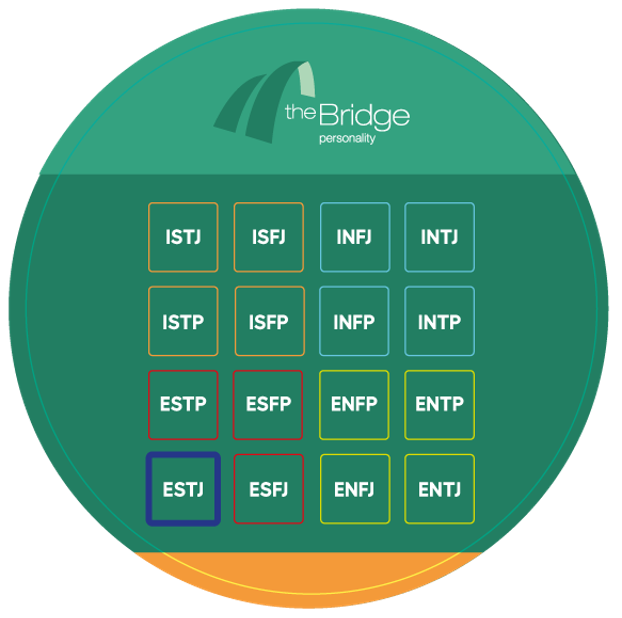
Preferences of ESTJs:
How do others view ESTJs?
ESTJs are often seen as individuals who bring matters to a successful conclusion. Others rely on decision-makers to devise systems, plans, and procedures and to make decisions when necessary. Decision-Makers communicate clearly and plainly, so others quickly know where they stand. They can be quite sociable and enjoy interacting with other people.
Others view ESTJs as:
Pitfalls and development points of the ESTJ:
When Decision-Makers find themselves in a place where they cannot use their characteristics and talents, they can:
ESTJ and career
If you have an ESTJ colleague, you can expect them to work in a structured, precise, and rule-driven manner. ESTJs thrive in well-organized environments with clearly defined roles and minimal risks. They value efficiency and stability and are open to learning, but only if it leads to direct, tangible improvements.
ESTJs are not necessarily the most innovative personalities and may sometimes clash with more creative and less structured types like INFPs and ENFPs. However, when these types learn to collaborate, they can complement each other perfectly. The ESTJ provides structure and efficiency, while the INFP or ENFP brings fresh ideas and alternative perspectives.
Best careers for an ESTJ
Since ESTJs prefer clarity, structure, and stability, they often choose careers where rules, organization, and efficiency are key. They are loyal employees who often stay with the same company for many years. Suitable careers for ESTJs include:






















The Bridge Tests & Online Assessments
TestGroup is the official provider of the renowned Bridge tests and online assessments, which are high-quality, scientifically validated psychometric tools used globally. Developed in collaboration with universities around the world, these assessments predict workplace behavior through personality tests, cognitive ability evaluations, and career assessments. We assist organizations globally in using online assessments.






-
What does the ESTJ personality type mean?
-
ESTJ stands for Extraversion, Sensing, Thinking and Judging. People with this type are outgoing, practical and focused on logic, structure and results. They are natural organisers who enjoy bringing order to tasks, teams and processes. ESTJs tend to take responsibility quickly and are comfortable leading others toward clear goals.
-
How is the ESTJ type described on the TestGroup page?
-
ESTJs are portrayed as decisive, analytical and well-organised. They prefer structure, consistency and clear expectations. They enjoy planning, implementing systems, coordinating people and ensuring operations run smoothly. They value tradition, reliability and efficiency, and they expect others to follow agreed procedures. They are seen as dependable, confident and strongly committed to their responsibilities.
-
Where does the ESTJ type come from?
-
ESTJ is one of the 16 personality types from the MBTI framework. The model is based on Jung’s psychological theory and uses four dichotomies (E–I, S–N, T–F, J–P) to determine a person’s type. Many people recognise the ESTJ profile from this system.
-
How does the ESTJ description in 16Personalities differ from other sources?
-
16Personalities uses the same letters as the MBTI (including ESTJ) but presents them with simplified language, modern visuals and easy-to-read explanations. It is designed for personal insight rather than for professional selection or organisational development.
-
How is The Bridge Personality different from MBTI and 16Personalities?
-
The Bridge Personality is not the MBTI. It provides a broader, more detailed analysis by combining three models: • Big Five traits (measured on continuous scales) • Jung’s 16 personality types • The 4-Colour model
Where MBTI and 16Personalities assign only one type, The Bridge Personality shows both the type (such as ESTJ) and the underlying trait scores. This gives a more complete and scientifically grounded picture of personality, which is especially important in recruitment and talent development.
-
Does The Bridge Personality also provide the ESTJ type?
-
Yes. It includes the 16 Jung Types, so participants can see whether they match the ESTJ profile. The major difference is that the ESTJ outcome is supported by detailed trait data and colour style information, which makes the interpretation more nuanced and practical for organisations.
-
Why do organisations prefer The Bridge Personality over MBTI or 16Personalities?
-
Because it offers:
• Strong scientific foundations through Big Five measurement
• Clear links to work-related behaviour and competencies
• More accurate insights for selection, coaching and team development
• Multi-layered feedback (type, traits and colour style)
• Reports designed specifically for businesses, HR teams and recruitersMBTI and 16Personalities are useful for self-understanding and communication training, but they do not provide the level of detail or predictive value needed for professional decision-making.
-
What are typical strengths of an ESTJ in the workplace?
-
ESTJs often excel at:
• Organising tasks, people and systems
• Creating structure and improving processes
• Making quick and logical decisions
• Leading teams and taking responsibility
• Consistency, reliability and strong work ethic
They thrive in environments where goals, procedures and expectations are clear.
-
What challenges or development areas do ESTJs commonly face?
-
Potential challenges include:
• Making fast decisions without considering all alternatives
• Coming across as strict or inflexible
• Limited patience with disorganisation or inefficiency
• Focusing so strongly on results that they overlook emotions or team dynamics
• Difficulty adapting to ambiguous or constantly changing situations
-
Which roles are well suited to an ESTJ?
-
ESTJs often flourish in positions that require structure, coordination and leadership. Common roles include project management, operations, finance, quality control, law enforcement, military roles, team leadership, auditing, business analysis and administrative management. They do best in environments where responsibilities are clear and where efficiency matters.
-
How can managers and colleagues work effectively with an ESTJ?
-
• Provide clear goals, expectations and deadlines
• Allow them to take ownership of planning and organising
• Communicate in a direct, practical way
• Give regular updates and avoid unnecessary complexity
• Recognise their reliability and commitment
• Encourage balance by helping them consider other viewpoints, emotions and long-term flexibility
Online Assessment Tips